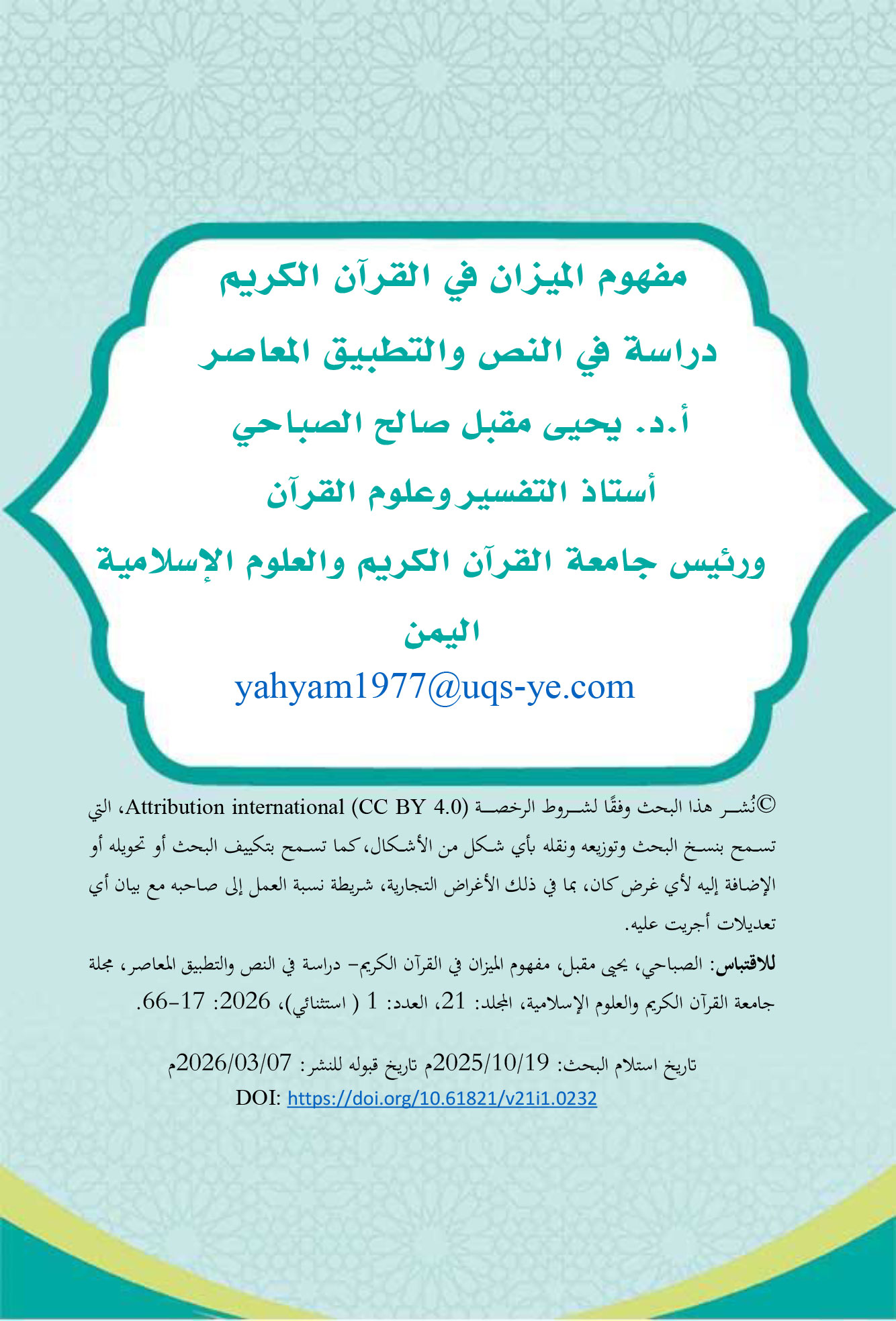
The Concept of Balance (al-Mīzān) in Holy Quran- A Study in Text and Contemporary Application
DOI:
https://doi.org/10.61821/v21i1.0232Keywords:
Al-Mīzān, Al-Qisṭ, Qur’anic Justice, Environmental Sustainability, Good GovernanceAbstract
This study analyzes the Qur’anic concept of al-Mīzān (the Balance) as a comprehensive reference framework for justice, transcending the physical sense of a weighing instrument into an integrated cosmic, legislative, and ethical system. The research adopts a multidimensional methodology combining textual analysis of Qur’anic verses, a maqāṣid-based (purposive) approach to extract the ultimate goals of al-qisṭ (equity), a comparative analysis to demonstrate the superiority of the Qur’anic balance over modern positivist theories of justice, and a contemporary applied approach. The findings reveal that al-Mīzān operates on four interrelated levels: a cosmic level regulating universal harmony, a legislative level establishing absolute justice intertwined with divine revelation, an economic level preventing exploitation and protecting rights, and an ethical level purifying the human conscience. The study recommends activating the "jurisprudence of al-Mīzān" in economic policies to combat monopoly and class disparity, in environmental ethics to promote sustainability, and in political and human rights discourses to counter authoritarianism and double standards, thereby reinforcing the values of good governance and human dignity.
Downloads
Downloads
Published
Issue
Section
License
Copyright (c) 2026 Journal of the University of Holy Quran and Islamic Sciences

This work is licensed under a Creative Commons Attribution 4.0 International License.
©This article is an open access article distributed under the terms and conditions of the Creative Commons Attribution (CC BY) license